
A political committee
Preserve the promise.
Rebuild the trust.
We defend the 14th Amendment, and finish what the Freedman's Bank started: a financial system that keeps its word to the people it was built for.
A political committee
We defend the 14th Amendment, and finish what the Freedman's Bank started: a financial system that keeps its word to the people it was built for.
1865 – 1874
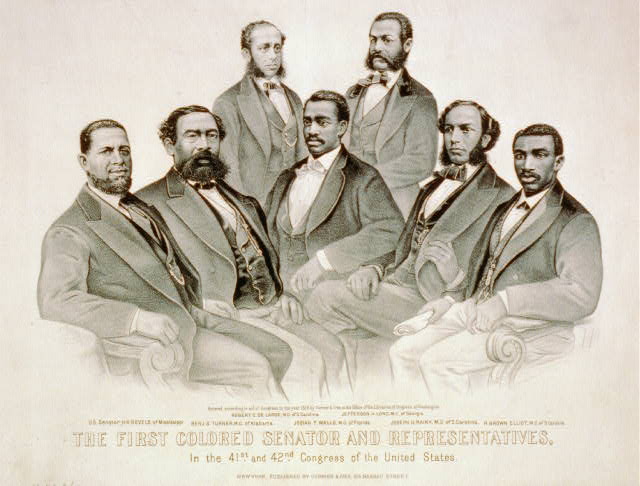
Congress chartered the Freedman's Savings and Trust Company so newly emancipated Black Americans could build wealth in safety. Within nine years, the bank's own trustees had quietly loaned depositors' savings to their friends and business partners.
When the panic of 1873 hit, there was nothing left to stand on. Frederick Douglass took over as president in a last attempt to save it. He was six weeks too late.
The record
14th Amendment, Section 1
“All persons born or naturalized in the United States… are citizens of the United States… nor shall any State deprive any person of life, liberty, or property, without due process of law; nor deny to any person within its jurisdiction the equal protection of the laws.”
Citizenship. Due process. Equal protection. We defend all three, and carry their meaning into the financial systems that decide who gets credit and who gets left out.
Section 5 — Congress may enforce this by legislationThe charter
The Freedman's Bank failed in the dark, moved by trustees no one outside the room could see. Every institution we back is built so that can't happen again.
A public, immutable record. Every loan, transfer, and reserve position, auditable as it happens — by regulators, depositors, and the public.
Underwriting and fraud models are tested for discriminatory impact before they touch a single application. Equal protection applies to algorithms too.
Security standards built to hold for the next fifty years of deposits, not the next five.
We are a political committee. We hold no deposits, offer no accounts, and sell no financial product. No fund tied to the historical Freedman's Bank exists for depositors' descendants to claim — and no "quantum financial system" offering guaranteed returns is real. Report either claim to the FTC.